


Capture enough context.
A record is useful when the next person can understand it. A short observation without a location or explanation may leave the reviewer reconstructing the situation. Keep the original facts and the next action distinct.
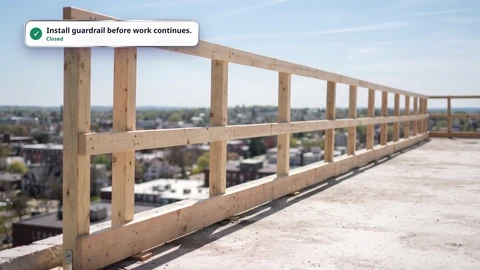
For a workflow example, a daily inspection might record that stored materials were obstructing an access route. The observation should describe what was seen and where, with relevant evidence attached. The action then explains the work that someone has been assigned to follow up.
That separation makes the record easier to read. The observation says what happened; the action says what needs to happen next.
Give the next step an owner.
“Someone should check this” is hard to follow. An assigned action gives a named person a clear piece of work, a due date and the context they need.
- Describe the action in plain words.
- Assign a person who can take responsibility for the follow-up.
- Set a due date appropriate to the situation and your organization’s process.
- Link back to the observation and its evidence.
Urgent hazards still need your workplace’s immediate response. An action record is not a reason to delay the steps your team needs to take on site.
Keep the closure useful.
A completed checkbox tells only part of the story. Keep enough information for a reviewer to understand what was done and what was checked.
Depending on the task, that might mean a factual completion note, a supporting photo or a record of review. Follow your organization’s requirements for what constitutes appropriate closure.
A useful action record connects the original observation to the work that followed.
The aim is a clearer handoff, not a longer form. Ask what the person reviewing the record will need, then capture that information where the work happens.
A simple follow-up planning sheet
An editable CSV for planning a record’s context, owner, due date and closure evidence. Adapt it to your organization’s process.
Download CSVThis note discusses workflow organization. Adapt it to your worksite and have the appropriate people review your safety processes. It does not replace professional judgment or your workplace procedures.
Explore inspections & actions